Showing posts with label ECB. Show all posts

Wednesday, February 20, 2013

(Late) 2013 Predictions

Last year I took a chance and threw my own projections into the ring. Similar to Byron Wien and Edward Harrison, I mostly selected events that were widely seen as having a low probability (less than 33%) but which I believed held a greater than 50% chance of occurring. The final results were a bit disappointing, but that won’t stop me from trying again this year. Since these predictions already represent a late release, without further adieu, here are the 2013 predictions:

1) Spain requests access to ECB’s OMT - Since ECB President Mario Draghi announced the OMT program, yields on Spanish debt have fallen rather dramatically. Although this eases financing pressure, it has done little to alter the actual economy’s downward spiral. During 2012 Spain’s GDP growth became increasingly negative, falling by 1.8% year-on-year in the fourth quarter. Meanwhile unemployment continues its meteoric rise to over 26% for the general population and nearly 60% for youth. With the large banks still severely undercapitalized and households over-indebted, private sector lending continues to decline:
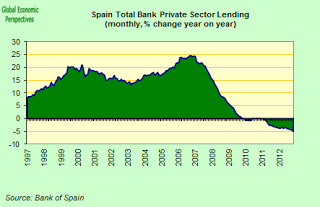


Seeing no recovery and potentially a worsening decline, “bond vigilantes” will eventually test Draghi’s threat. At that point Spain will be forced to accept a Memorandum of Understanding (MoU) in return for ECB bond-buying through the OMT program.

2) The Euro finishes the year above $1.30 - After falling nearly 10% during the first half of 2012, the euro has more than recouped its losses on the back of optimism and deflationary policies.
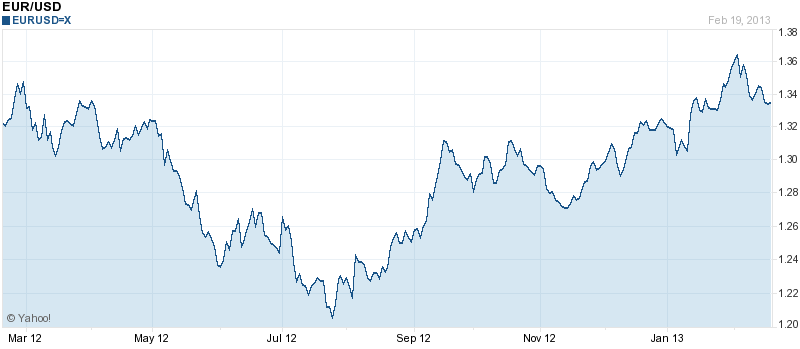
At points during 2013 the optimism is likely to fade, but I expect politicians and central bankers will take the necessary steps to quell fears for the time being. Unfortunately those steps will involve further deflationary policies that push the euro higher. These competing forces will largely cancel out, leaving the euro close to or above where it began the year.

3) The Eurozone remains in recession the entire year - Forecasters now expect euro-zone economic activity to be flat this year, down from a previous prediction of 0.3% growth made just three months ago. Last year saw practically continuous downgrades to GDP growth forecasts and I expect this year to be no different. Austerity measures are momentarily easing, but more will likely be enacted based on the outcomes of several elections. The recent appreciation of the euro against several major currencies will also dampen growth by putting pressure on net exports. With banks across Europe trying to build up capital and persistently high unemployment, the private sector will remain especially weak. Though Germany may experience a temporary rebound, the Eurozone as a whole will not register GDP growth this year.

4) The Japanese yen rises above 90 per $ - Since the election of PM Shinzo Abe, the yen has fallen fast and is down more than 20% from recent highs.
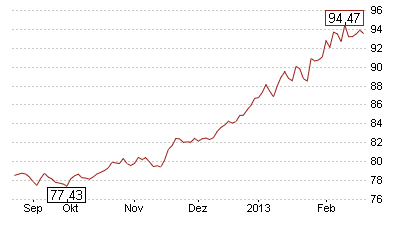
During this time the Nikkei has risen more than 20%, yet yields on Japanese sovereign debt are little changed. This suggests many foreigners may be speculating on the supposedly forthcoming monetary and fiscal stimulus. As previously stated, the fiscal stimulus will probably be small and short-term. On the monetary front, short of actually entering the foreign exchange market, the Bank of Japan (BOJ) has essentially no mechanism to spur inflation and thereby cause a sustained depreciation of the yen. When market participants recognize the inability of Japan to avoid continued deflation, the yen will return to appreciating against the dollar.

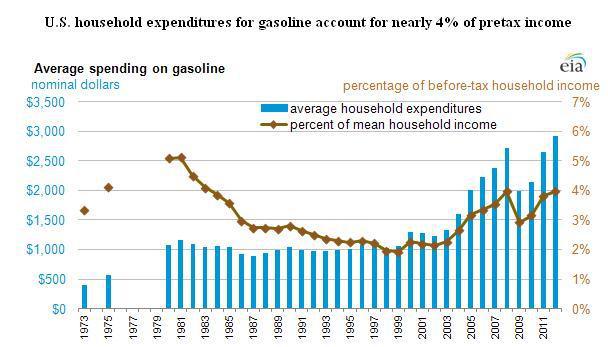
5) Gas prices will peak above $4.20 per gallon and set a new yearly record-high average above $3.75 per gallon - Gasoline prices have been on the rise for the past 31 days, currently averaging approximately $3.75 per gallon. Though this current streak will probably end soon, prices are unlikely to give back much of the gains before beginning the typical rise into summer. The ongoing potential for flare ups in the Middle East will keep prices elevated throughout the year. Higher gas prices, which already account for 4% of before-tax household income (chart below), will be a drag on consumer spending in 2013.

6) U.S. Yearly GDP growth falls below 1.5% - Forecasts of ~3% annual GDP growth over the past couple years have been overly optimistic as real growth in 2011 and 2012 was merely 1.6% and 1.9%, respectively. Apparently forecasters are being a bit tamer in their estimates this year, now expecting only 2% annual growth. Unfortunately I suspect these estimates will once again prove too optimistic. Various tax hikes and the upcoming sequester (which will go through in some respect) will reduce the budget deficit by a few percent this year. Housing is likely to remain a bright spot, but further declines in interest rates will not lead to similar magnitudes of the wealth effect. Credit remains tight for many households and small business, which should also limit private sector activity. All of these factors combined will probably not be enough to bring about a new recession but will lead to the lowest annual growth rate during this upswing.
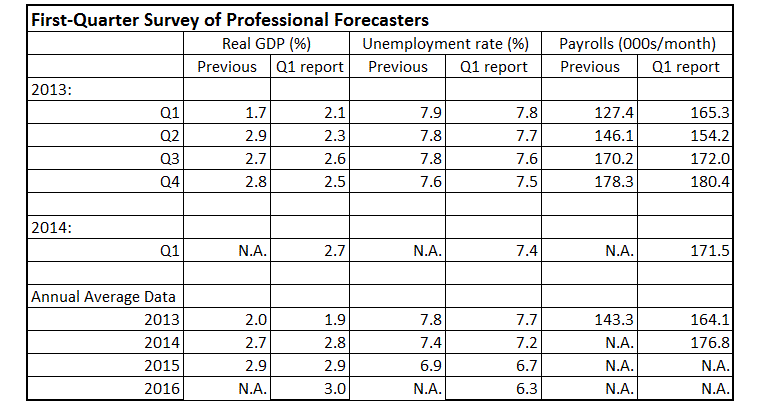

7) U.S. Unemployment rises above 8% - Currently sitting at 7.9%, the unemployment rate is forecast to decline during 2013. Due to weaker GDP growth, corporate revenues will barely rise again this year. As companies face increasing pressure to maintain profit margins at record levels, a new wave of layoffs may occur. Separately, continuing economic growth will encourage previously discouraged workers to re-enter the job market. Both of these factors will lead to slightly higher measured unemployment.

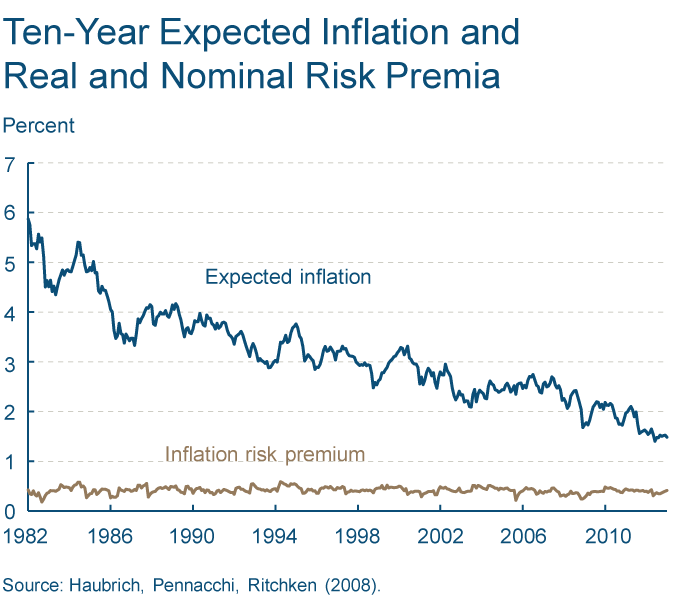
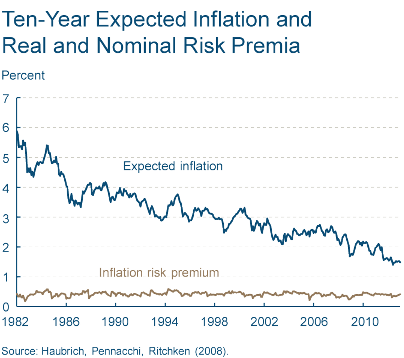
8) Federal Reserve forecasts shift first rate hike to 2016 - After extending their forecast for the first rate hike to 2015, the Federal Reserve changed its tactics to a more rule-based monetary policy. The Fed has, in effect, promised to keep rates low until we've hit either 6.5 percent unemployment or 2.5 percent inflation. Based on the above outlook for unemployment and a continuing decline in inflation expectations (chart below), FOMC members will revise their own forecasts and push back expectations for the first rate hike.

9) U.S. Corporate Earnings (ex-Federal Reserve) finish year below 2012 peak - Meager revenue growth was not enough to prevent U.S. Corporate Profits after tax from reaching record highs in the fourth quarter of 2012 on the back of record profit margins. US Corporate Profits After Tax Chart

As global growth slows in 2013, revenues will come under further pressure. At this point the ability of firms to continue cutting costs without sacrificing output seems limited, which means margins may begin to compress. As margins revert to previous norms, earnings will register a yearly decline.

10) Bonds outperform stocks - During the first seven weeks of this year the stock market has been on fire, even though earnings estimates continue to fall.
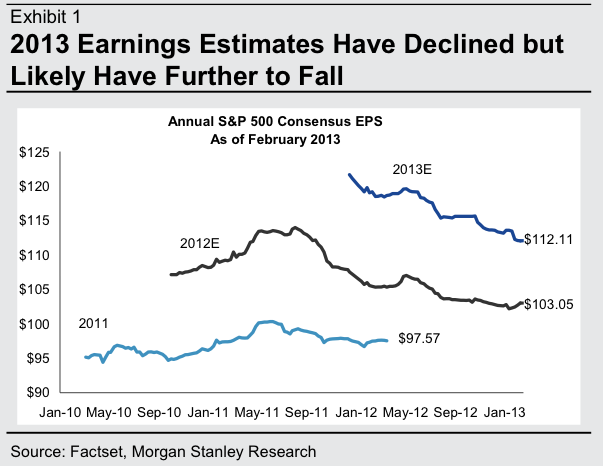

Multiple expansion is currently being driven by the Federal Reserve’s actions despite their ineffectiveness at generating actual NGDP growth. When investors eventually turn their attention to continuing troubles in Europe, ongoing deflation in Japan, and/or weakening growth in China, U.S. earnings may once again enter the picture. Recognition that S&P 500 earnings growth has slowed substantially may cause the market to give up much of this year’s gain. These concerns combined with declining inflation expectations will result in many investors returning to the safety of U.S. Treasuries. The subsequent rise in prices (decline in rates) will generate another year of positive returns for the Treasury market.


Will my predictions prove too pessimistic once again? Only time will tell...

Thursday, January 17, 2013

2012 Predictions: The Results

Last year I took a chance and threw my own projections into the ring. Similar to Byron Wien and Edward Harrison, I mostly selected events that were widely seen as having a low probability (less than 33%) but which I believed held a greater than 50% chance of occurring. Let’s see how I did...

1) Greece leaves the Euro - As the year progresses the Greek economy continues to contract and unemployment continues to rise, surpassing 50% for youth. This combination of factors offsets attempts to reduce the budget deficit as the country repeatedly misses EU and IMF required targets. Despite potential for further bailouts, the Greek people finally decide the consequences of tied promises outweigh the benefits of remaining in the Euro. Greece defaults on all debts, returning to a heavily depressed drachma.

Result - Wrong (0-1). During 2012, Greece was successful in reducing its budget deficit by 30 percent and staying in the Eurozone. This success was in large part due to further defaults on public debt and another bailout. Unfortunately for the Greek people. the price of these efforts remains extraordinarily high. The economy may have contracted as much as 6.5 percent in 2012, the fifth year of recession, according to forecasts in the 2013 budget. Meanwhile both the general and youth unemployment rates continue to soar, reaching ~27 percent and ~58 percent, respectively. At this point Greece is clearly in the midst of a Depression and showing no signs of recovering anytime soon. Greek tolerance of increasing unemployment and decreasing prosperity remains a surprise, although radical political parties have been gaining support. For now Greece remains in the Eurozone, but a future exit remains likely.

2) Italy and Spain lose access to credit markets - A Greek default raises concerns about the potential for creditors to face actual losses on EU sovereign debt. The ECB’s measured efforts are not strong enough to overcome fear and concern about future growth in Italy and Spain. Deep recessions take hold in both countries, pushing deficits higher.

Result - Wrong (0-2). A Greek default and concerns about the European economy weighed heavily on EU sovereign debt during the first half of the year. By the summer, ten-year bond yields in Spain and Italy were at 7.75 percent and 6.75 percent, respectively, and rising. With the countries at risk of losing access to credit markets, ECB President Mario Draghi came forth with a plan to cap sovereign interest rates using open-ended outright monetary transactions (OMT). Draghi’s threat was enough to generate a 180 degree turn in EU sovereign debt markets, but nowhere near enough to turn around the economies. Italy and Spain both returned to recession this past year, pushing fiscal deficits and unemployment higher. While Italy’s unemployment rate remains closely tied to the EU-wide level of ~11 percent, Spain’s general and youth unemployment rates have quickly caught up to Greece’s levels. Eventually Draghi’s Liquidity Bluff Will Be Called, potentially sooner rather than later as a strengthening euro may reignite the EU crisis.

3) The Eurozone enters recession - Practically the entire Eurozone falls into recession, including the likes of France and Germany. A deteriorating economic outlook causes deficit estimates to be raised across the board, facilitating credit rating downgrades. Agreements for greater austerity fail to stem the tide and other attempts to kick the can down the road are pursued.

Result - Correct (1-2). The euro zone economy contracted 0.2 percent in the second quarter and 0.1 percent in the third, meeting the technical definition of a recession. The fourth quarter drop is looking even worse following recent news that Germany  saw output shrink 0.5 per cent between October and December. Although Germany managed to run a slight fiscal surplus, at the expense of growth, Spain’s budget deficit probably exceeded 9 percent for a fourth year in 2012. The first half of the year did witness credit downgrades and austerity agreements, but Draghi’s big kick at the end of summer pushed any further actions into future years.

4) China’s GDP growth falls below 7% - As exports to Europe contract, the busting of China’s housing bubble continues unabated. Expectations for massive monetary easing in Europe and the US, along with fear of flare ups in the Middle East sets a floor under energy and food commodity prices. Monetary easing and fiscal stimulus in China are applied too slowly to prevent growth from slowing below the supposedly necessary 8%. (Note: This will be not be considered a hard-landing, which I deem growth below 5%. That may come in 2013, but for 2012 most economists/analysts will be able to maintain expectations of a soft-landing.)

Result - Wrong (1-3). During the third quarter China’s growth rate slowed to a three-year low of 7.4 percent, but the year-end tally will probably be around 7.7 percent. As growth slowed and housing prices fell early in the year, the government took action to allow a smoother transition between governments. Fiscal stimulus has pushed growth and inflation higher in the last few months, but at the expense of rebalancing the economy toward consumers for future sustainability.

5) Oil prices will spike above $120, finish year below $90 - (Using WTI crude prices, currently ~$102) At some point during the year Iran attempts to block the Strait of Hormuz. Further attempts to overthrow governments in the Middle East, possibly some that only recently gained power, hit the headlines again. Combined with global monetary easing, oil prices will move higher and gasoline will once again hit $4 per gallon in the US. These higher prices will exaggerate the reduction in global demand for other goods and push growth lower. As fears of a global recession take over, oil prices will fall, finishing the year down more than 10%.

Result - Wrong, but close (1-4). Fears about Iran and the Middle East never really materialized this year but that did not prevent a wild ride in oil prices. After rising to over $113 in April, WTI crude prices dropped all the way down to $80 in August (daily price history). A rally in the last week of the year brought the closing price slightly back above $90. Brent crude prices diverged significantly from WTI in 2012, keeping gas prices at the pump high throughout the summer. Gas prices peaked at $3.94, not quite $4, but nevertheless reached a record-high average of $3.62 per gallon.

6) US enters recession in 2nd half - Despite higher 4th quarter GDP in 2011, the lower savings rate and energy prices are unlikely to add much growth in 2012. With Europe contracting and China slowing down more than expected, US exports will take a hit. Extensions of the payroll tax cut and unemployment benefits will help ensure the federal deficit holds above 8%. Housing prices will continue to fall (based on Case-Shiller) causing the savings rate to once again reach 5%. By the end of 2012, the US will be in a recession (although NBER may not confirm this until 2013).

Result - Wrong (1-5). Despite Europe contracting, China slowing down and the federal deficit dropping to 7% (still over $1 trillion), US GDP growth remained positive throughout 2012. After falling to 1.3 percent in the second quarter, annualized GDP growth jumped to 3.1 percent in the third quarter. Although current estimates for fourth quarter GDP are below 1 percent, the US is most likely not in a recession at this time. Partially behind the positive growth was the impact of housing prices rising over 5 percent and the savings rate remaining below 4 percent.   

7) Federal Reserve extends forecasts for ~0% rates until 2015 - As growth in the US weakens once again and the global economy slows, expected inflation over the next ten years (based on Cleveland Fed estimates) will fall towards 1%. With unemployment holding steady around 9%, the Fed will move it’s forecasts for the first interest rate hike out to 2015. (Some form of QE3 is also likely, but aside from promoting short-term speculation, the effects on growth are likely to be muted.)

Result - Correct (2-5). Expected inflation over the next ten years fell consistently during the course of the year to approximately 1.5 percent (chart below). Although unemployment improved materially, dropping below 8 percent, the Federal Reserve still felt the urge to step up monetary stimulus. On September 13th, 2012, the FOMC extended its projections for maintaining “exceptionally low levels for the federal funds rate...at least through mid-2015” while enacting a plan to purchase “additional agency mortgage-backed securities at a pace of $40 billion per month” indefinitely. Since QEternity was insufficient to boost growth, the Fed also enacted QE4 to raise the rate of balance sheet expansion.


8) President Obama will win re-election - Generally a weakening economy has been poor for incumbents but this time will be seen as abnormal circumstances. The troubles in Europe and high unemployment will actually spark desire for a more interventionist government. Given the choice between Obama and Romney, the President will win re-election by a slim margin (2% or less).

Result - Correct (3-5). President Obama crushed Romney in the 2012 election based on the electoral college, however the popular vote was decided by less than 3 percent.

9) The US dollar rises over 5% - (Based on dollar index) In spite of QE efforts and another sizable deficit, the US dollar retains its safe haven status. As fears of European defaults spread and China’s slowing growth impacts commodity prices, the dollar will continue to trend higher.

Result - Wrong (3-6). As fears spread about European default and a slowdown in China, the dollar rose several percent into the summer months. When those fears were assuaged by politicians, not economic data, the euro began a strong rally. By the end of the year, the dollar had essentially finished flat.

10) Bonds outperform stocks - The consensus once again favors stocks, although US Treasuries have now outperformed stocks over the past 1, 10 and 30 year horizons. With global growth slowing, inflation expectations will fall. Before this bull market in bonds ends, 10- and 30-year Treasuries may reach 1% and 2%, respectively.

Result - Wrong (3-7). Slowing global growth, falling inflation expectations and stagnating corporate earnings were not enough to deter stocks from a very strong performance in 2012. The Bernanke put morphed into a proactive Fed determined to push asset prices higher and succeeding to the tune of over 15 percent. While stocks were riding towards new highs, the bull market in bonds also remained intact. The 10- and 30-year Treasuries hit their respective lows of 1.43 and 2.46 during the summer before heading higher into year end. Ultimately 10- and 30-year Treasuries last year posted returns of only 3 percent and 2.5 percent, respectively.   

That’s the end of it. 3-7 is certainly a bit of a disappointment, especially given the direction of events through the first half of the year. That being said, the logic behind each prediction was sound and far more on target than the end result suggests. My main takeaway is that politicians are far more determined to maintain the status quo than I had expected. The underlying economic (and social) problems have once again been kicked down the road for future governments to handle. As long as that pattern holds, current optimism and modest growth can persist for another couple years.

My hope is to have Predictions for 2013 out by the end of next week. Stay tuned.  

Tuesday, August 21, 2012

ECB Will Not Cap Rates Unconditionally

By now, most readers have probably seen the headlines regarding the ECB capping interest rates on sovereign debt that stemmed from the following article (h/t Sober Look):
Der Spiegel: - As part of its efforts to fight the euro crisis, the European Central Bank (ECB) is considering establishing caps on interest rates for government bonds in individual countries as part of its future bond-buying program. Under the plan, the ECB would begin purchasing government bonds from crisis-hit countries if yields for those bonds exceeded the interest rates for benchmark German sovereign bonds by a predetermined amount. This would signal to investors which interest rate levels the ECB believes to be appropriate.
While the response to this proposition has been appropriately positive, it appears many have forgotten that Draghi effectively laid out this plan in his “big” speech a few weeks back. At that time, there was a general feeling that the ECB was undergoing a philosophical change that included a willingness to eliminate the solvency and redenomination concerns (a power it holds as monopoly supplier of the currency).

My reaction at that time was a little less sanguine (my emphasis):
Whether or not these “philosophical changes” ever become reality remains an open question, but the ideas of renouncing seniority and leaving QE open-ended are clearly a step in the right direction. That being said, Draghi maintains the ECB’s position that further action is conditional on fiscal consolidation and structural reform. In this more important sense, the ECB’s philosophy has not really shifted at all.
Once again, I get the distinct impression that many pundits are overlooking the critical factor that the ECB will not act unconditionally. Doing so would practically eliminate the ECB’s leverage in ensuring compliance with the Maastricht treaty and reaching their desired ends.

These recent “open mouth operations” by the ECB have once again bought time for Europe to come up with a grand resolution. It seems these actions have also provided the peripheral governments (especially those in Spain and Italy) with a bit more bargaining power. A game of chicken may now ensue between Spain/Italy and the ECB to see which side blinks first. Will Spain and Italy accept fiscal consolidation and structural reform in return for a guaranteed cap on yields? Or will the ECB be forced to intervene before those conditions are accepted? And how long will markets remain complacent without any actual action?

Those are the important questions that came to my mind following the Der Spiegel report. My best guess is that markets will once again force the hand of politicians and central bankers. Although I believe the ECB would blink, if politicians stand strong, I doubt it will come to that. Therefore, solvency and redenomination concerns will be erased, while economic stagnation continues. Whether or not that status quo can be maintained politically remains an open question....  

Tuesday, August 7, 2012

Bubbling Up...8/7/12

1) The week when Mr Draghi greatly diminished the office of ECB President and sacrificed the fiscal-monetary policy distinction (in a manner that does not even help the euro in the short run!) by Yanis Varoufakis
What was the ECB’s position before Draghi’s heroic declarations? It was that it cannot arrest the crisis unless member-states act as part of a Grand Deal on how to effect a Eurozone-wide fiscal policy. Then and only then, the ECB would bolster their efforts through its own monetary operations. Clearly, that position led markets to believe that the Eurozone had no credible plan for dealing with the Crisis, as the cart (fiscal union) was being placed before the horses (serious ECB-centred intervention to stop the death embrace between insolvent banks and insolvent nations).
And what is the Draghi position after Thursday’s crucial ECB board meeting? That the ECB is ready to buy bonds in the secondary market once member-states act as part of a Grand Deal on how to effect a Eurozone-wide fiscal policy. In other words, no change whatsoever. None!
Woj’s Thoughts - Yanis and I are clearly on the same page. See ECB's Changing Philosophy is Good for Bond Holders but Bad for the Economy and ECB's Means (Lost Decade With High Unemployment) To An End (Structural Reform)

2) Draghi’s comments about the ECB doing “whatever it takes” are irrelevant by Edward Harrison
There is only one issue here: how many reforms the periphery will undertake. There will be no support unless we see reforms. If the periphery capitulates and slashes government jobs, raises pension ages, and makes it easy to fire people, Germany and the ECB will give them anything they want. Until they go whole hog, they won’t get full support.
This is blackmail, of course. But Monti, Samaras, and Rajoy are neoliberal reformers. So they want this too, just not the domestic political loss that goes along with it. Germany is obliging them by playing the fall guy for their domestic cutting agendas.
But, in my view, Europe is screwed. Eventually the neoliberals will have to cave and try to reflate in order to save their own hides when the debt deflation moves to the core or the Great Depression begins. They think they can extract the reforms they want before depression becomes firmly entrenched. I think they’re wrong.
3) Michal Kalecki on the Great Moderation by Steve Randy Waldman
Here is Kalecki describing with preternatural precision the so-called “Great Moderation”, and its limits:
"The rate of interest or income tax [might be] reduced in a slump but not increased in the subsequent boom. In this case the boom will last longer, but it must end in a new slump: one reduction in the rate of interest or income tax does not, of course, eliminate the forces which cause cyclical fluctuations in a capitalist economy. In the new slump it will be necessary to reduce the rate of interest or income tax again and so on. Thus in the not too remote future, the rate of interest would have to be negative and income tax would have to be replaced by an income subsidy. The same would arise if it were attempted to maintain full employment by stimulating private investment: the rate of interest and income tax would have to be reduced continuously."
Dude wrote that in 1943.
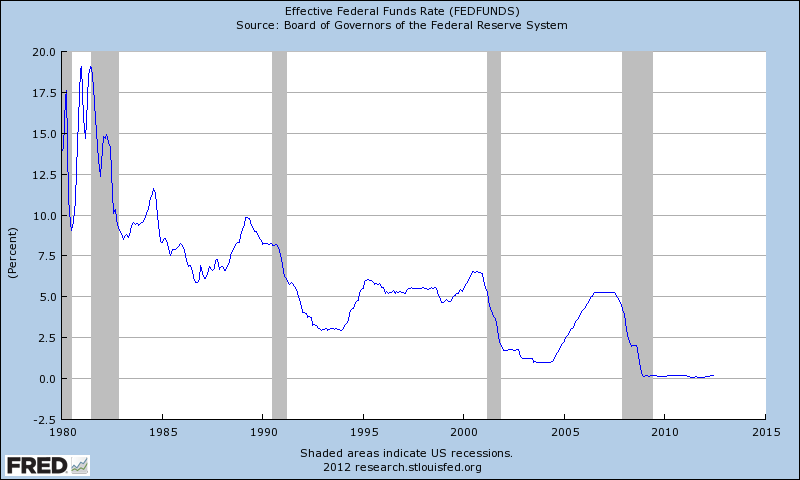
Let’s check out what FRED has to say about interest rates during the era of the lionized, self-congratulatory central banker:


Yeah, those central bankers with their Taylor Rules and DSGE models were frigging brilliant. New Keynesian monetary policy was, like, totally a science. Who could have predicted that engineering a secular collapse of interest rates and incomes tax rates (matched, of course, by an explosion of debt) might, for a while, moderate business and employment cycles in a manner unusually palatable to business and other elites? Lots of equations were necessary. No one would have guessed that, like, 70 years ago.
Woj’s Thoughts - Wow! Could Kalecki have been more correct?! Sadly our current policies are still attempting to induce further growth through a interest rate reductions (despite the zero lower bound) and lower income taxes (despite a substantial portion of the population already receiving an income subsidy). Maybe these policies can still produce another debt led boom but, the end of the road is fast approaching.

4) The Crisis in 1000 words—or less by Steve Keen
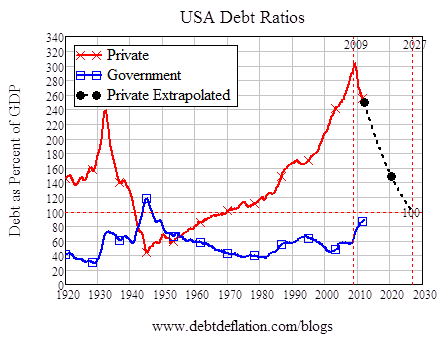
The causation behind this correlation is that money is created “endogenously” when the banking sector creates loans, and this newly created money adds to aggregate demand—as argued by non-orthodox economists from Schumpeter through to Minsky. When this debt finances genuine investment, it is a necessary part of a growing capitalist economy, it grows but shows no trend relative to GDP, and leads to modest profits by the financial sector. But when it finances speculation on asset prices, it grows faster than GDP, leads obscene profits by the financial sector and generates Ponzi Schemes which are to sustainable economic growth as cancer is to biological growth.
When those Ponzi Schemes unravel, the rate of growth of debt collapses and the boost to demand from rising debt becomes a drag on demand as debt falls. In all other post-WWII downturns, growth resumed when debt began to rise relative to GDP once more. However the bubble we have just been through has pushed debt levels past anything in recorded history, triggering a deleveraging process that is the hallmark of a Depression.
 
Woj’s Thoughts - The extreme levels of private debt can alter an economic system from being robust to fragile. In this manner, the chance that shocks destabilize the system and the magnitude of the ensuing deleveraging both increase dramatically.

Thursday, August 2, 2012

ECB's Changing Philosophy is Good for Bond Holders but Bad for the Economy

Last week, a report from Jon Hilsenrath at the WSJ and comments from ECB President Mario Draghi sent markets screaming higher in expectations of an onslaught of monetary stimulus being announced this week. Following the conclusion of meetings by the FOMC and ECB, those expectations are now delayed. Bernanke was the first to disappoint, announcing no new monetary stimulus and merely repeating the obvious pledge to do more, if necessary. Today, Draghi proved that European policy makers will continue to talk a big game while offering little in terms of details or even a plan of action.

While many reports are focusing on the lack of follow through by Draghi, a strong countervailing opinion is presented at Mosler Economics.

Karim writes:Draghi announced significant philosophical changes today. The key announcements were:
  • The ECB was ready to renounce seniority on its bond purchases.
  • The size of future purchases was open-ended: ‘size adequate to reach its objectives’.
  • Future purchases may not be sterilized, as they have been with the SMP so far.
  • Purchases would be front-end focused as that ‘falls squarely in line with monetary policy instruments’. A key instrument is obviously the LTROs. So would imagine purchases would be 3yrs and in on the curve.
The adherence of governments to their commitments and the fulfilment by the EFSF/ESM of their role are necessary conditions [for some action on the ECB side]. The Governing Council, within its mandate to maintain price stability over the medium term and in observance of its independence in determining monetary policy, may undertake outright open market operations of a size adequate to reach its objective. In this context, the concerns of private investors about seniority will be addressed.Other news was that:
  • As in the excerpt above, purchases would be subject to strict conditionality via the EFSF (i.e., Spain has to accept a Memorandum of Understanding). Fiscal consolidation and structural reform were listed as the key conditions.
  • He threw cold water on the ESM getting a banking license, saying he was ‘surprised by the attention this has received’.
  • Logistics and objectives on bond purchases were TBD by a committee.
  • Further non-standard measures were forthcoming.
  • Rate cuts were discussed but unanimously voted down; as for a negative depo rate he said ‘we are in unchartered waters’, implying the hurdle may be high.
Relative to levels before Draghi’s London speech last week, Spanish 2y yields are 200bps lower, and 10yr yields are 50bps lower.

Whether or not these “philosophical changes” ever become reality remains an open question, but the ideas of renouncing seniority and leaving QE open-ended are clearly a step in the right direction. That being said, Draghi maintains the ECB’s position that further action is conditional on fiscal consolidation and structural reform. In this more important sense, the ECB’s philosophy has not really shifted at all. Describing that philosophy recently (ECB's Means (Lost Decade With High Unemployment) To An End (Structural Reform)), I concluded:
By working to prevent an all out collapse of the EMU, Draghi is merely taking the necessary actions to maintain his position. If Spain or other European countries must “suffer from a decade of recessions with unemployment over 20%” in order to implement the desired structural reforms than so be it.
As long as this philosophy remains in play, the most likely outcome in Europe will be a sustained period of high unemployment with declining or stagnating growth. Operationally this scenario can go on indefinitely but politically the time may be running out.

Tuesday, July 31, 2012

Bubbling Up...

Each day I scroll through, skim, and read upwards up a few hundred blog posts. Many provide good insights, pose interesting questions or offer notable quotes. Although I wish there was enough time to highlight the best posts each day individually, I don’t believe attempting that feat would be beneficial to myself or readers. Instead, I’m going to try and present a batch of the best links each day with quotes that hopefully spark a desire to click through and read further. Any suggestions of clever titles for these posts would be appreciated. Without further adieu, here are today’s posts that are Bubbling Up...

1) Full reserve degenerates to fractional reserve, absent regulations to stop it. by Ralph Musgrave

“Thus when private banks start “lending money into existence” as the saying goes, inflation ensues, but that inflation does not need to be reversed by periodic severe recessions, as occurs under the gold standard.
Moreover, banks and those they lend to are not greatly concerned about the inflation. Reason is that in making a loan, BOTH bank and borrower become creditor AND debtor. I.e the agreement (at least initially) is: 1. The borrower owes the bank £Y till the loan is repaid, and 2, the bank owes the borrower £Y, which obligation the bank undertakes to transfer to anyone that the borrower chooses – using his/her cheque book. Initially, to repeat, both bank and borrower are both debtor and creditor, so neither are bothered by inflation.”
2) Paul de Grauwe: The ECB Can Save the Euro – But It Has To Change Its Business Model
“It is surprising that the ECB attaches so much importance to having sufficient equity.  In fact, this insistence is based on a fundamental misunderstanding of the nature of central banking. The central bank creates its own IOUs. As a result it does not need equity at all to support its activities. Central banks can live without equity because they cannot default.
The only support a central bank needs is the political support of the sovereign that guarantees the legal tender nature of the money issued by the central bank. This political support does not need any equity stake of the sovereign. In fact it is quite ludicrous to believe that governments that can, and sometimes do, default are needed to provide capital to an institution that cannot default. Yet, this is what the ECB seems to have convinced the outside world.“
Woj’s Thoughts: Political support is complicated by the lack of a fiscal and political union. Although the ECB could set rates on sovereign debt, it cannot ensure those rates flow through to private borrowers or that private credit expansion returns. The ECB can buy considerable time, but alone cannot save the Euro.

3) Biggest EPS Miss Since Lehman, And This Time It's Not The Tsunami's Fault
Citi Credit Weekly - “Undoubtedly, part of the reason that Spain and Greece have come back into focus is that the earnings of US companies continue to be so uneven. With more than half of S&P500 companies having reported, we’re only now starting to get the full picture, and viewed from the top down perspective it’s far less pretty than even last week led us to believe. Relative to expectations, top line revenues have been especially weak, with nearly all sectors surprising to the downside, even as EPS and EBITDA have tended to beat.
But even those sorts of statistics tend to hide the true weakness because equity analysts tend to revise expectations down while earnings season is still ongoing, which explains why some 72% of S&P500 companies manage to beat expectations in a weak quarter.”
Woj’s Thoughts: Quarter after quarter, revenues continue to miss expectations across the board while the majority of earnings beat. Are analysts systematically underestimating margins? Are companies buying back more stock to boost earnings? Or, are clever accounting practices becoming increasingly efficient in displaying earnings growth?

4) Conservatives and the State by Francis Fukuyama
“When I was asked by the editors of the Financial Times to contribute to a series on the future of conservatism, I hesitated because it seemed to me that in both the US and Europe what was most needed was not a new form of conservatism but rather a reinvention of the left. For more than a generation we have been under the sway of conservative ideas, against which there has been little serious competition. In the wake of the financial crisis and the rise of massive inequality, there should be an upsurge of left-wing populism, and yet some of the most energized populists both in the US and Europe are on the right. There are many reasons for this, but one of them is surely that publics around the world have very little confidence that the left has any credible solutions to our current problems.
The rise of the French Socialists and Syriza in Greece does not belie this fact; both are throwbacks to an old and exhausted left that will sooner rather than later have to confront the dire fiscal situation of their societies. What we need is a left that can stem the loss of rich-world middle class jobs and incomes through forms of redistribution that do not undermine economic growth or long-term fiscal health.
But if you can’t solve the problem from the left, maybe you can do it from the right. The model for a future American conservatism has been out there for some time: a renewal of the tradition of Alexander Hamilton and Theodore Roosevelt that sees the necessity of a strong if limited state, and that uses state power for the purposes of national revival. The principles it would seek to promote are private property and a competitive market economy; fiscal responsibility; identity and foreign policy based on nation and national interest rather than some global cosmopolitan ideal. But it would see the state as a facilitator rather than an enemy of these objectives.”

Saturday, July 28, 2012

ECB's Means (Lost Decade With High Unemployment) To An End (Structural Reform)

Early in the week, global stock markets were falling fast as Spanish yields surged higher across the curve. Fearing that markets would quickly spiral out of hand, Jon Hilsenrath (WSJ) stemmed the tide by signaling forthcoming action from the Federal Reserve next week. Not to be outdone by his US counterpart, the ECB’s Mario Draghi provided a bazooka of open mouth operations by stating:
"The ECB is ready to do whatever it takes to preserve the euro. And believe me, it will be enough"
As Bruce Krasting points out, this is not the first time an EU politician has proclaimed an end to the crisis. While details of Draghi’s plan remain largely unknown (and undecided?), even his best efforts will do little to spur economic growth. Spain is suffering from excessive private debt, a bursting housing bubble and as Krasting notes:
its competitiveness. The domestic economy will never recover without a currency devaluation (and debt restructuring). If Mario has his way, Spain will suffer from a decade of recessions with unemployment over 20%.  How could he possibly call that outcome a success?
The answer to that question is actually quite simple and was given by JW Mason in a post titled Pain Is the Agenda: The Method in the ECB's Madness:
Here's an editorial in the FT on the occasion of last summer's ECB intervention to support the market for Italy's public debt:
Structural reform is the quid pro quo for the European Central Bank’s purchases last week of Italian government bonds, an action that bought Italy breathing space by driving down yields. ... As the government belatedly recognises, boosting Italy’s growth prospects requires a liberalisation of rigid labour markets and a bracing dose of competition in the economy’s sheltered service sectors. This is where the unions and professional bodies must play their part. Susanna Camusso, leader of the CGIL, Italy’s biggest trade union, is threatening to call a general strike to block the proposed labour law reforms. She would be better advised to co-operate with the government and employers... The government’s austerity measures are sure to curtail economic growth in the short run. Only if long overdue structural reforms take root will the pain be worthwhile.
A couple of things worth noting here. First the explicit language of the quid pro quo -- the ECB was not just doing what was needed to stabilize the Italian bond market, but offering stabilization as a bargaining chip in order to achieve its other goals. If ECB was selling expansionary policy last year, why be surprised they're not giving it away for free today? Note also the suggestion that a sacrifice of short-term output is potentially worthwhile -- this isn't some flimflam about expansionary austerity, but an acknowledgement that expansion is being give up to achieve some other goal. And third, that other goal: Everything mentioned is labor market reform, it's all about concessions by labor (including professionals). No mention of more efficient public services, better regulation of the financial system, or anything like that.
The FT editorialist is accurately presenting the ECB's view. My old teacher Jerry Epstein has a good summary at TripleCrisis of the conditions for intervention; among other things, the ECB demanded "full liberalisation of local public services…. particularly… the provision of local services through large scale privatizations”; "reform [of] the collective wage bargaining system ... to tailor wages and working conditions to firms’ specific needs...”;  "thorough review of the rules regulating the hiring and dismissal of employees”; and cuts to private as well as public pensions, "making more stringent the eligibility criteria for seniority pensions" and raising the retirement age of women in the private sector. Privatization, weaker unions, more employer control over hiring and firing, skimpier pensions. This is well beyond what we normally think of as the remit of a central bank.
So what Krugman presents as a vague, speculative story about the ECB's motives -- that they want to hold politicians' feet to the fire -- is, on the contrary, exactly what they say they are doing.
It's true that the conditions imposed by the ECB on Italy and Greece were in the context of programs relating specifically to those countries' public debt, while here we are talking about a rate cut. But there's no fundamental difference -- cutting rates and buying bonds are two ways of describing the same basic policy. If there's conditions for one, we should expect conditions for the other, and in fact we find the same "quid pro quo" language is being used now as then.
Here's a banker in the FT:
The future of Europe will therefore be determined by the interests of the ECB. Self-preservation suggests that it will prevent complete collapse. If necessary, it will overrule Germany to do this, as the longer-term refinancing operations and government bond purchase programme suggest. But self-preservation and preventing collapse do not amount to genuine cyclical relief and policy stimulus. Indeed, the ECB appears to believe that in addition to price stability it has a mandate to impose structural reform. To this extent, cyclical pain is part of its agenda.
Again, there's nothing irrational about this. If you really believe that structural reform is vital, and that democratic governments won't carry it out except under the pressure of a crisis, then what would be irrational would be to relieve the crisis before the reforms are carried out. In this context, an "irrational" moralism can be an advantage. While one can take a hard line in negotiations and still be ready to blink if the costs of non-agreement get too high, it's best if the other side believes that you'll blow it all up if you don't get what you want.  Fiat justitia et pereat mundus, says Martin Wolf, is a dangerous motto. Yes; but it's a strong negotiating position.  
The whole post is well-worth reading, but these comments say it all. By working to prevent an all out collapse of the EMU, Draghi is merely taking the necessary actions to maintain his position. If Spain or other European countries must “suffer from a decade of recessions with unemployment over 20%” in order to implement the desired structural reforms than so be it. Whether or not that outcome is politically feasible remains an open question, but I have my doubts. Draghi was not the first to claim “it will be enough" and won’t be the last to make that claim either.